 Incorect Politic O Publicație Dizidentă
Amory Stern
Incorect Politic
Iulie 11, 2025
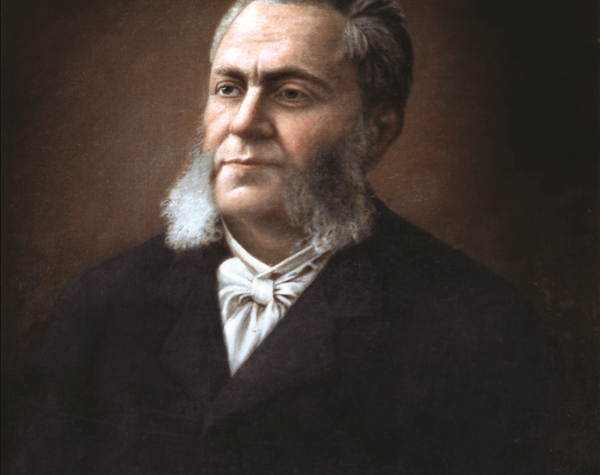
A.D. Xenopol: Historian of Romania, Philosopher of Europe
Alexandru Dimitrie Xenopol was born on March 24, 1847, in Păcurari, a settlement in Iași, the capital of the Romanian principality of Moldavia. At that time, Moldavia was still officially an Ottoman vassal, but in practice the Ottoman suzerainty had largely been usurped by Russian influence since the time of Catherine the Great. Xenopol would witness the process of unification of Moldavia with the fellow Romanian principality of Wallachia to the west, the capital of which was Bucharest. As Xenopol came of age, the principalities would be formally unified in 1859. Later, when Xenopol had already started to become somewhat known as a historian, Romania would officially win independence from the Ottoman Empire as Russia’s most important ally in the Russo-Turkish War of 1877-1878. The improvement of Romania’s status in Europe would be the cause to which Xenopol would dedicate his life and his considerable intellectual talents. In addition to his Romanian nationalism, Xenopol also had patriotic feelings for Iași as a city, Moldavia as a region and former principality, and Europe as an ethnic and civilizational family.
Xenopol was the son of Dimitrie Xenopol, a mysterious immigrant to Moldavia (and convert to that principality’s native Orthodoxy) of Anglo-Saxon and German extraction, of whom more will be remarked later, and a Romanian mother from a family of Greek origin. Dimitrie, who knew German, Russian, French, and other languages as well as Romanian, was a clerk at the Prussian Consulate in Iași when Alexandru was born. Dimitrie later held a job working in the garden of a Iași prison-keeper. Although Dimitrie never made much money, he went to great lengths to ensure that Alexandru would be well-educated. Young Xenopol decided on history as his favorite subject after reading François Guizot’s works on European and French history after school in the Iași’s prison-keeper’s garden.
Growing up in Iași, Xenopol learned Greek and mastered Latin as well as learning French and German. One of his teachers in Iași, Titu Maiorescu, would become an important patron of his before bitterly falling out with Xenopol. Maiorescu was the leader of a Iași-based literary circle called Junimea, which was dedicated to founding a new school of Romanian literary and cultural criticism. For years, Xenopol developed a close relationship with the group’s secretary, Iacob Negruzzi, who would likewise later become his sworn enemy.
Under Junimea’s financial patronage, Xenopol studied in Berlin from the late 1860s to 1871. His instructors included the great historians Theodor Mommsen and Leopold von Ranke. Xenopol completed courses in philosophy and law by 1871, and biographer Paul A. Hiemstra argues that Xenopol tended to approach the field of history with the sensibilities of a lawyer making legal cases.
In 1872, having returned to Iași the previous year, Xenopol attended a ceremony at a monastery in the commune of Putna founded by the distinguished 15th century Moldavian prince Stephen the Great, the most beloved ruler of Moldavia and a prolific patron of monasteries, noted for handing Mehmed II “the Conqueror” the greatest defeat the Ottomans had seen thus far in 1575. On the 400th anniversary of the monastery’s construction, a competition was held for speeches about Stephen the Great in relation to the Romanian people. Xenopol’s speech, which connected the legacy of Stephen the Great to Romanian nationalism, won the competition.
At the time he won this competition, Xenopol was considered a representative of the Junimea circle. Even when he was still associated with Junimea, however, Xenopol’s ideas were never identical with Maiorescu’s and strayed from the latter’s influence. Xenopol further drifted from the group’s influence in the 1870s until officially breaking with Junimea in 1878, prompting the group’s leaders to attack and often smear him.
Xenopol’s account of his father as of Anglo-Saxon and German origin conflicts with the story of his bitter former friend Iacob Negruzzi that his father was a Jewish immigrant. Negruzzi, it should be noted, also dubiously alleged that Xenopol had gone mad from a syphilis infection. One of the reasons Xenopol had fallen out with his onetime associates at Junimea being that he found them insufficiently critical of Jewish immigration to Romania, an allegation that his father was a Jewish immigrant would have been an excellent way to embarrass him. (On the issue of Jewish immigration to Romania, as well as that of alcoholism in Romania, Xenopol worked closely with A.C. Cuza—although their worldviews were never synonymous.) That Xenopol’s own origin story is—at the very least—closer to the truth is immediately affirmed by a viewing of photographs of him, with his markedly English appearance.
Xenopol’s animosities with Junimea, rival Romanian historians, and anti-Romanian foreign historians did not hamper his productivity. In 1880 he published a two-volume work on the rivalry between the Ottoman Empire and Russia for influence over the Romanian principalities; Xenopol’s account is unsympathetic to either power. In 1884 he published a scathing but well-argued response to certain Austrian claims about the origin of the Romanian people. But it was from 1888 to 1893, publishing a volume each year, that Xenopol produced his pioneering six-volume work Istoria românilor din Dacia-Traiană. The work covers the history of Romania from pre-Roman times to the nineteenth century; it was groundbreaking for its time and, although obviously dated, is still rightly regarded as a classic in Romania. Xenopol also wrote a two-volume abridgement of this work in French, which was successful when it was published in 1896.
Having studied in Berlin under the economic theorist Eugen K. Dühring, Xenopol also showed a keen interest in economics. (This author, Amory Stern, has commented on Eugen Dühring and his influence as Eminescu’s teacher in Berlin in the introduction to the 2023 English edition of Oswald Spengler’s Prussianism and Socialism.) Dismayed by Romania’s antiquated and subservient agricultural economy, Xenopol advocated industrial modernization.
Xenopol argued that Romania’s lack of industry left the nation vulnerable to exploitation by wealthier countries and susceptible to corruption as well as a shrinking population. Reflecting his education in Bismarck’s Prussia under Dühring, Xenopol also argued against free trade and economic liberalism, instead favoring economic nationalist programs of industrialization. On the other hand, he recommended that his country proceed with caution when implementing such an agenda, as Romania was in no position to start a war.
Having accomplished much in the fields of history and economics, by the end of the 19th century Xenopol added to these achievements his contribution to philosophy, specifically the philosophy of history. In 1899, he published his philosophical tract in French, Les Principes Fondamentaux de l’Histoire. This work was revised in a 1908 second edition as La Theorie de l’Histoire. It has also been translated into Romanian as Teoria istoriei and Principiile fundamentale ale istoriei.
Xenopol’s book dealt with a popular question among philosophers at the time, that of whether or not the field of history can be considered a science, and if so, what kind of science it is. In the book, Xenopol draws a division between the sciences of unchanging laws and the sciences of changing phenomena. History, he proposes, belongs to the latter kind of science.
Xenopol begins his thesis with a philosophical realist rejection of Kantian epistemology. Hiemstra’s biography complains that Xenopol’s dismissal of Kant’s ideas is undeveloped, but although this would have been quite a defect if he had written an epistemologically themed book, Xenopol’s pithy critique of Kantian idealism is a reasonably adequate argument that the latter is unsuited for the historian’s field. It doesn’t require an especially deep analysis to argue that epistemological realism best suits the scholarship of history—at least not in a book themed after the philosophy of history, rather than epistemological questions themselves.
Xenopol then develops a categorization of “theoretical sciences” as those that deal with repeating facts and can be measured with abstract formulas. “Historical sciences” by contrast deal with successions of changing, unrepeatable facts and can only be measured empirically. These include not only history proper but also paleontology and the study of human descent — as opposed to the laws of biology, which belong to the “theoretical sciences,” together with the physical sciences.
Whereas the theoretical sciences, according to Xenopol’s philosophy, deal with space, the historical sciences are related to time. For Xenopol, unlike Kant, both time and space belong to reality, and not just to the human perception. Xenopol defines science as the truthful reflection of reality, and accordingly he responds to various philosophical objections arguing that history does not qualify as a science, because it cannot be determined with abstract formulas. To Xenopol, the theoretical sciences only represent one category of science, but the historical sciences equally qualify as truthfully reflecting reality. The book then deals with the difference between the historical sciences and the moral or political biases of the historian.
La Theorie de l’Histoire then takes a turn that would be considered more controversial today than it was when the book was written. Although Xenopol viewed the facts of history as always changing and never exactly repeating, he also believed in some constant factors throughout history. The first of those he lists is race.
Xenopol argues that populations of human beings differ not just physically, but intellectually and spiritually. Some of these differences, according to Xenopol, are the result of natural evolution, but he also believes that differences acquired through major historical processes are hereditary. This, he believes, can be counted among the constant elements in history. Although this kind of outlook was popular in the fin de siècle era, when the book was published, it was by no means universally accepted, as demonstrated by Xenopol’s replies to the argument’s critics. (In his views on race, Xenopol was influenced by the sociological arguments of Gustave Le Bon, whose ideas Xenopol often applied to the philosophy of history.)
Related to race, but distinct from it in Xenopol’s model, is “national character.” This phenomenon, according to Xenopol, is formed from the natural and constant influences of a race placed against the changing backdrop of historical events. “Distinguishing between race and nationality in a manner which he had not managed to articulate during his student years,” summarizes Hiemstra, “Xenopol described national character as the ‘translation’ of a peculiar combination of organically based psychological complexions into the ‘intellectual manifestations’ of a particular national group.”
In this aspect of Xenopol’s thinking, many would see a contrast with what he argues in the same book about national and other prejudices clouding the potential of the field of history for scientific truth. Xenopol — who, in contrast to the following century’s narratives of Romania’s National Communist period, admired the ancient Romans — believed Romanians to belong to “the Latin race,” which he considered an example of a race evolved from acquired but hereditary characteristics. This was a different category of race for him than the designation of a naturally formed race, such as “the white race.” Xenopol’s admiration for both the Dacians and the Romans bears comparison with Eminescu’s, but also with French currents of thought admiring both the Romans and the Gauls.
In contrast to the typical Eastern European cult of autochthonous status, Xenopol emphasized the role of migrations and colonizations in the foundations of both Romania and Europe. That he starts Istoria românilor din Dacia-Traiană with the Scythians even before the Dacians can, to some extent, be seen as a dated but reasonably accurate description of the intrusive Indo-European elements from Scythia. With the same kind of romantic realism, as Xenopol’s style may be termed, he also proudly highlighted historic instances of colonization by the Romanians themselves. (Xenopol was an early pioneer in writing about the Vlacho-Bulgarian Empire, but he came of age at a time when Byzantinology was not very widely studied; had he known more about Byzantinology, Xenopol would have probably discussed the later findings of Adolf Armbruster, about how the early Romanians colonized Constantinople.)
Among Xenopol’s beliefs was that the historical and contemporary Hungarian rule of the Carpathians amounted to a colonization lacking the European legitimacy of most other contemporary European colonies, because the Magyar language and nationality are not of Indo-European origin. According to Xenopol: “The Hungarians owe their civilization only to their very considerable mixture with such peoples of Aryan race, capable of civilization as the Slavs and the Romanians.” On the other hand, he displayed respect and admiration for Germans and Slavs, though in both cases recognizing their historic and contemporary rivalries with Romania. Sharing less with the small-space chauvinism associated with Southeastern Europe than with the kind of racial bellicosity his time is known for, Xenopol ranked the white race, and above all the Aryan race of Europe, at the top of an unabashed hierarchy of human races.
Xenopol represented a country that had never been a colonial power, and which had a long history of having the economic (but not legal) status of a colony; Xenopol the economist and the philosopher of history saw colonialism in Africa as an evolutionary cautionary tale for his own people. Xenopol’s theory of evolution as a mystery anticipates that of Lucian Blaga in Triologia culturii. Xenopol’s philosophical work should be considered together with Xenopol’s work as an economist, in which he argued that Romania had degenerated into African socioeconomic conditions.
Xenopol would live into the first two decades of the twentieth century, seeing his work as a historian inspire both followers and critics in Romania. By that time the Romanian capital and former Wallachian capital of Bucharest had replaced his native Moldavian capital of Iași as the chief Romanian cultural center, and Xenopol was not happy about it. Falling gravely ill and partially paralyzed, Xenopol lived out the turbulent years of World War I as an invalid. By that time he was not even fully articulate, but after Romania gained the region of Transylvania from the hated Austro-Hungarian Empire and Béla Kun’s Communist Hungary in the aftermath of the war, the younger Romanian historian Nicolae Iorga visited Xenopol and claimed to discern a smile on Xenopol’s face. Xenopol, who had fallen on hard times since the war years, died on February 27, 1920, on the very same day the Romanian Parliament voted to give him a pension.
For someone from a country with a strong history of anti-modern romanticism on the one hand, and a later history under Stalinist models of Communism on the other, Xenopol comes across as something of a liberal; he was not one by Western standards. Xenopol’s work displays a certain hardness not seen in other, more sentimental Romanian historians, such as Nicolae Bălcescu before Xenopol or Nicolae Iorga after him. Perhaps nowhere is this better seen than in his philosophy of history.
In his theme of national degeneration, Xenopol’s thinking somewhat resembles the pessimistic outlook of Eminescu. The difference is that Xenopol’s philosophy is based on a realist metaphysics in place of Eminescu’s philosophical idealism. But like Eminescu, Xenopol wasn’t just a thinker of degeneration, but also of regeneration.
A.D. Xenopol was more than just the pioneering historian of Romania and historiographer of the Romanian people he is most often remembered for. Long before the National Communist period, Xenopol the economist recognized the need to industrialize Romania. As a philosopher of history, Xenopol was also a philosopher of Europe—that is, Europe the ethnic family, long before anyone had ever heard of Europe the bureaucracy. If there is a central theme to his work as a historian, his work as a sociologist, his work as an economist, and his work as a philosopher together, it is that of degeneration and regeneration.
–Amory Stern, June 2025
Montgomery County, Pennsylvania

https://21stcenturywire.com/2025/07/03/the-new-israel-cyprus-silent-occupation/
Israelul fură casele și mașinile ciprioților – urmeaza România
https://romaniafarajustitie.wordpress.com/2025/06/30/israelul-fura-casele-si-masinile-cipriotilor/
Alt proiect de lege a lui Vexler: România „retrocedată” aproape integral, evreilor!
https://romaniafarajustitie.wordpress.com/2025/06/28/alt-proiect-de-lege-a-lui-vexler-romania-retrocedata-aproape-integral-evreilor/
https://web.facebook.com/mihai.lasca.5/posts/3117608371742101/?_rdc=1&_rdr – Mihai Lasca FB
ALERTĂ PENTRU ROMÂNIA ! Vexler, reprezentantul evreilor în Parlamentul României și coordonatorul partidelor trădătoare PNL, PSD, USR, UDMR plus minorități, a trecut un nou proiect de lege, prin care se atentează direct la dreptul de proprietate al românilor!
Legea retrocedărilor a fost modificată, prin inițiativa reprezentantului minorității evreiești, astfel încât orice proprietate din România poate fi atacată printr-o simplă solicitare de retrocedare, fără acte doveditoare! Vor fi acceptate cereri de retrocedare cu elemente de identificare generice, fără a mai solicita acte doveditoare, cum era prevăzut de legislația inițială a retrocedărilor! ÎNȚELEGEȚI GRAVITATEA ACESTEI LEGI? Voi reveni cu detalii privind această lege monstruoasă! senat.ro/legis/lista.aspx?nr_cls=L121&an_cls=2025 https://share.google/JT0YQNZYaE2eWZNIs
Primăria Capitalei accelerează retrocedările: Mii de dosare, semnate de Bujduveanu
https://jurnalul.ro/stiri/locale/primaria-capitalei-accelereaza-retrocedarile-mii-de-dosare-semnate-de-bujduveanu-1003599.html
A inceput naționalizarea mascata a proprietăților private, in folosul deepstate !
https://www.ziuanews.ro/editorial/a-inceput-nationalizarea-mascata-a-proprietatilor-private-in-folosul-deepstate-1588894
Șoșoacă, tranșantă cu recensământul BNR. ”V-ați dat acordul, atenție!„
Despre recensământul anunțat de BNR, Diana Șoșoacă nu are o părere bună. Președinta S.O.S. România îndeamnă cetățenii să nu deschidă ușa, scrie stiripesurse.ro.
https://www.cotidianul.ro/sosoaca-transanta-cu-recensamantul-bnr-v-ati-dat-acordul-atentie/
BNR, despre sondajul privind avuția populației ( VEZI COMENTARIILE !!!)
https://www.cotidianul.ro/bnr-despre-sondajul-privind-avutia-populatiei/
Vi-l mai aduceți aminte pe ăsta? Attila Marko, fugit în Ungaria, fiind urmarit de DNA în mai multe dosare penale, speța, retrocedări. A stat fără nicio problemă 8 ani la Budapesta sub protecția guvernului Viktor Orban, iar acum este proaspăt ales deputat UDMR!
https://www.napocanews.ro/2024/12/vi-l-mai-aduceti-aminte-pe-asta.html
Ilie Sârbu, socrul lui Victor Ponta, numit în consiliul de administrație al Romsilva. Ex-urmărit penal de DNA pentru retrocedări ilegale de păduri
https://60m.ro/ilie-sarbu-socrul-lui-victor-ponta-numit-in-consiliul-de-administratie-al-romsilva-ex-urmarit-penal-de-dna-pentru-retrocedari-ilegale-de-paduri/
Familia mafiotă Băsescu și retrocedări ilegale de miliarde: Raportul CIA care deconspiră retrocedarea Aeroportului Giulești
https://anchetatorii.ro/2022/12/13/familia-mafiota-basescu-si-retrocedari-ilegale-de-miliarde-raportul-cia-care-deconspira-retrocedarea-aeroportului-giulesti/
Abuz incredibil al statului: Culisele celui mai mare furt comis împotriva unei proprietăți private. „La Borșa sunt clanuri mafiote ca-n Sicilia”
https://jurnalul.ro/special-jurnalul/abuz-stat-furt-padure-composesoratul-borsa-986233.html
[…] „În 2004 a fost o Hotărâre definitivă a Judecătoriei Aleșd, pe care s-au reconstituit 17.000 de hectare de teren forestier, a apărut Legea 247/2005, dar autoritățile nu au pus în executare Hotărârile instanțelor, ci au redistribuit cele 17.000 de ha către alte persoane. 6.000 de hectare le-au dat [ IZRAELITU-] lui Frank Timiș și rudelor lui, care au administrat din 2006 până în 2023, au făcut zeci de milioane de euro numai din lemnul tăiat ilegal, pentru care nu a răspuns nimeni penal. Mai sunt și alte suprafețe care s-au dus către retrocedări ilegale. Circa 4.000 de hectare sunt pentru urmașii lui Dan Adamescu, acesta cumpărând drepturi litigioase de la alte persoane, 1.600 de hectare sunt cumpărate de Ikea și așa s-a ajuns ca membrii Composesoratului Borșa să fie puși în posesie, în 2006, doar că nu le-a mai recunoscut nimeni drepturile de proprietate” [..]
https://www.youtube.com/watch?v=spuL_MkGKxo
Dumitru Coarnă, despre orașul de 15 minute: „Nu poți ieși din acea zonă decât cu pașaport” “Ei încearcă să creeze un conflict, intre categorii socio-profesionale, intre pensionari, studenți, elevi, polițiști, judecători, s.a.md. … Dar ȚINTA PRINCIPALA a ACESTUI GUVERN SUNT ACTIVELE ROMANIEI: HIDROELECTRICA, NUCLEARELECTRICA, ROMSILVA, SALROM, ROMGAZ, PORTUL CONSTANTA, CEC Bank, Posta Romana,. A si vorbit fostul ambasador al Americii, sa le vindem activele, el știa lista. USR a avut în PROGRAMUL de GUVERNARE, chestia asta, si PNL a achiesat la ea. În PSD, sunt scindați, deocamdată – or să-i alinieze si pe ăia – ii cheama la DNA si i-au aliniat imediat. […]
Salrom, în război deschis cu ministrul Economiei, înainte de listarea la bursă a companiei
https://jurnalul.ro/special-jurnalul/salrom-razboi-ministrul-economiei-listare-bursa-1003487.html
CFR – pus să dubleze prețurile. S-a găsit soluția optimă pentru faliment
https://jurnalul.ro/special-jurnalul/faliment-cfr-calatori-compensatii-sindicate-1003476.html
Primarul PNL interimar din București „semnează peste noapte mii (!!!) de retrocedări de imobile, în București”
https://flux24.ro/primarul-pnl-interimar-din-bucuresti-semneaza-peste-noapte-mii-de-retrocedari-de-imobile-in-bucuresti/
Avertismentul Profesorului Ilie Bădescu: Din cauza prăbușirii natalității, un sfert din satele din județul Dolj se află în risc de dispariție
https://www.activenews.ro/stiri/Avertismentul-Profesorului-Ilie-Badescu-Din-cauza-prabusirii-natalitatii-un-sfert-din-satele-din-judetul-Dolj-se-afla-in-risc-de-disparitie-198469
O taxă neobișnuită a provocat controverse printre români. „Să pună taxă și pe costumul de baie, nu?” aici dacă pui cearșaful trebuie să plătești 100 de lei. Cum să ceri 100 de lei pentru un cearșaf? Care e ideea? Sunt glume proaste făcute de antreprenori? Vor să distrugă litoralul românesc cu orice preț, vor să se răzbune, să ne alunge din țară, să mergem pe litoral în Bulgaria în Grecia? Este incredibil.
https://click.ro/actualitate/national/o-taxa-neobisnuita-a-provocat-controverse-printre-2457226.html?utm_campaign=crossout&utm_source=adevarul.ro
Dr. Aristide Lefa, prietenul lui Valeriu Gafencu: Trăim toate cele prezise – se pregătește Dictatura globală († 12 iulie 2009)
https://www.activenews.ro/opinii/Dr.-Aristide-Lefa-prietenul-lui-Valeriu-Gafencu-Traim-toate-cele-prezise-se-pregateste-Dictatura-globala-%E2%80%A0-12-iulie-2009-198510
Bucureștiul mai face un pas spre “orașul de 15 minute”: Planul Primăriei Capitalei pentru reducerea emisiilor și interzicerea circulației mașinilor în anumite zone
https://www.ziuanews.ro/stiri/bucure-tiul-mai-face-un-pas-spre-ora-ul-de-15-minute-planul-primariei-capitalei-pentru-reducerea-emisiilor-i-interzicerea-circula-iei-ma-inilor-in-anumite-zone-1589043
BNR începe un sondaj despre averea românilor, datorii și cheltuieli. Ancheta, recomandată de OCDE
https://adevarul.ro/economie/bnr-incepe-un-sondaj-despre-averea-romanilor-2457104.html
BNR face un recensământ al avuției cetățenilor români, la ordinul Uniunii Europene. Scopul ascuns este confiscarea celor 2 milioane de locuinte si proprietati cu succesiune vacantă
https://www.ziuanews.ro/dezvaluiri-investigatii/bnr-face-un-recensamant-al-avu-iei-ceta-enilor-romani-la-ordinul-uniunii-europene-scopul-ascuns-este-confiscarea-celor-2-milioane-de-locuinte-si-proprietati-cu-succesiune-vacanta-1589020
Tombole în obiecte și bani în numerar, pentru românii care îi “toarnă” pe cei care fac evaziune fiscală
https://www.ziuanews.ro/stiri/tombole-in-obiecte-i-bani-in-numerar-pentru-romanii-care-ii-toarna-pe-cei-care-fac-evaziune-fiscala-1589040
România dă două miliarde de euro pentru achiziția unui sistem israelian de rachete
https://www.ziuanews.ro/stiri/romania-da-doua-miliarde-de-euro-pentru-achizi-ia-unui-sistem-israelian-de-rachete-1589022
Why are Israeli war criminals hiding out in Patagonia? — De ce se ascund criminalii de război israelieni, în Patagonia?
https://www.youtube.com/watch?v=V0RA2mxrFPE
Oscar Leon de la The Grayzone examinează rapoartele despre veteranii israelieni din Gaza care se ascund în regiunea Patagonia din Argentina, o țară guvernată de un susținător înrăit al Israelului, care a creat legături strânse cu rețelele mesianice și cu guvernul lui Benjamin Netanyahu.
Acuzația uluitoare a unui important lider cipriot, împotriva Israelului: “Vom descoperi că pământul nostru nu ne aparține…
https://www.youtube.com/watch?v=MJRNON4cdpU
https://gazetadecluj.ro/legea-168-2025-o-actiune-impotriva-memoriei-identitare-si-istoriografiei-romanesti/
OUG 31/ 2002, modificata de cinci ori pană acum (istoricul modificărilor este un veritabil spectacol caragialesc)
https://www.napocanews.ro/2025/07/oug-31-2002-modificata-de-cinci-ori-pana-acum-istoricul-modificarilor-este-un-veritabil-spectacol-caragialesc.html
[..] Ordonanta a fost adoptata in 2002, dupa ce premierul Adrian Nastase a făcut o vizita in SUA, in 2001, și a făcut unele promisiuni unui lobby evreiesc american in schimbul sustinerii procesului de aderare la NATO. Ordonanța este efectul manierei de a face politica externă a politicienilor români care, prin ei înșiși, nu reprezentau si nu reprezinta nimic pentru occidentali, avand ca singur instrument politic legitimarea tranzactionala slugarnica. Romania a apelat la acest tip de lobby inca din vremea lui Gh. Dej. In prezent, oamenii de legatura dintre politicienii români si lobby-ul evreiesc american sunt niste personaje cu mentalitate (si biografie) comunista genuina, care se folosesc de un demers istoric si memorial onorabil pentru răfuieli specifice ethosului luptei de clasa. [..]
Jocuri dubioase pe seama memoriei și istoriei românilor: Vexler face circ după sesizarea făcută de Nicușor Dan pe tema legii ”anti-legionare” dar CCR deja a respins contestația SOS, AUR și POT deși inițial o amânase până în septembrie ! FOTO: N.Dan cu Vexler, la Sinagoga!
https://www.activenews.ro/opinii/Jocuri-dubioase-pe-seama-memoriei-si-istoriei-romanilor-Vexler-face-circ-dupa-sesizarea-facuta-de-Nicusor-Dan-pe-tema-legii-anti-legionare-dar-CCR-deja-a-respins-contestatia-SOS-AUR-si-POT-desi-initial-o-amanase-pana-in-septembrie-198471
COMENTARII : IDEFIX: Vexler, Alexandru Florian si cei din Israel conduc de facto România. Îmi aduc aminte cum NIELS S. era purtătorul de cuvânt al lui Crin Antonescu apoi ceva s-a intamplat , Crin a mers la Tel Aviv si s-a întors cu demisia. Vezi doamne, ca era vorba de comunicare. Amestecul lor pe cînd iată râvnesc si la teritoriul Românesc care le-ar fi aparținut, dictează martirii neamului si susțin pe cine trebuie la alegeri. Ce se întâmplă în Israel, unde numai democrație nu e, ar trebui sa îi întrebați pe românii de acolo, care nu au locuințe decât împreună cu arabii, în regiunile cele mai periculoase. Ei au voie la naționalism, noi nu. De aici toate relele. Norocul lor cu Cristos. Asta i-a determinat strategic, să își mute capitala la Ierusalim, știind ca nu va fi atacată vreodată. BOLO-MUCI : Dle Alexandru Anghel, nu sunt „Jocuri dubioase pe seama memoriei și istoriei românilor” ci o bătaie de joc pe față, premeditată, ușor de observat la acești trădători ai Neamului, bazată pe indolența, obediența românilor și prostia multora. Pe aceeași temă cu acea contestație la așa-zisa ccr făcută de holograma nicu, am făcut comentariul de mai jos: 10.07.2025 15:58 „Sper sa nu fiți așa de creduli si să luați drept buna manipularea asta de doi bani, cu contestarea la ccr a legii lui vaxler, lansată pe piață de papusarii din spatele hologramei mucu$ori$te!”
Așa ca….dormi în pace românaș (când nu dormi, micii, berea și vacantele/concediile sa trăiască), trădătorii tăi nu dorm, lucrează pe repede înainte!
Silvian-Emanuel Man: Solicit public domnului Tudorel Toader, să condamne atacurile fizice și instigările la violență împotriva mea
https://www.napocanews.ro/2025/07/silvian-emanuel-man-solicit-public-domnului-tudorel-toader-sa-condamne-atacurile-fizice-si-instigarile-la-violenta-impotriva-mea.html
Stegarul dac, închis la Rahova, în greva foamei de 2 saptamani și de 3 zile în greva apei! Ce se va întâmpla cu el??
https://danielvla.wordpress.com/2025/07/11/stegarul-dac-inchis-la-rahova-in-greva-foamei-de-2-saptamani-si-de-3-zile-in-greva-apei-ce-se-va-intampla-cu-el/
A.D. Xenopol: Historian of Romania, Philosopher of Europe
[..] Povestea lui Xenopol despre tatăl său ca fiind de origine anglo-saxonă și germană este în contradicție cu povestea fostului său prieten Iacob Negruzzi, conform căreia tatăl său ar fi fost un imigrant evreu. Negruzzi, trebuie remarcat, a susținut, de asemenea, în mod dubios, că Xenopol a înnebunit din cauza unei infecții cu sifilis. Unul dintre motivele pentru care Xenopol se certase cu foștii săi asociați de la Junimea fiind acela că îi considera insuficient de critici față de imigrația evreiască în România, o afirmație potrivit căreia tatăl său ar fi fost un imigrant evreu ar fi fost o modalitate excelentă de a-l face de râs […]
Credeți în ”revoluție” prin ”educație”? V-aș ruga să ne spuneți mai precis ce este ”revoluția” care, după cum afirmați, ar fi realizabilă prin ”educație”. Cercetând istoria constatăm, fără să înțelegem prea bine, că așa numitele ”revoluții” au fost realizate exact prin ură și violență, prin decapitarea a sute, mii, poate milioane de oameni, decapitați ghilotinați, împușcați, spânzurați, etc. Credeți cumva că împușcarea soților Ceaușescu a fost rezultatul educației revoluționare a celor ce se pretind revoluționari? Dacă da, unde și-au făcut ”educația” revoluționarii respectivi, și cei de după ei, de le-a reușit atât de bine asasinarea soților Cesușescu, exterminarea ulterioară a altor membri ai familiei Celui mai iubit Fiu al Poporului, distrugerea întregii economii naționale, care înseamnă pregătirea exterminării întregului popor român? În ce școli și-au făcut ”educația” revoluționari mai cunoscuți, de exemplu Lenin, Stalin, Mao Tze Dun și alții? Oare educația se măsoară după viteza și precizia cu care Lenin și revoluționarii lui au ucis familia și prietenii familiei țariste, apoi, cu aceeași foarte educată delicatețe, încă vreo zece, poate chiar douăzeci sau mai multe milioane de oameni. Bănuiesc că îi admirați pe ”revoluționari”, pe cei ce ucid cât mai mulți oameni cu putință, dacă nu mă înșel. Cel ce ucide un om este un criminal! Cel ce ucide doi sau trei oameni este un criminal înrăit. Trebuie oare să să credem că cel ce ucide câteva mii sau câteva milioane de oameni este într-adevăr revoluționar. În acest caz, culmea ”revoluției” ar fi într-adevăr uciderea sau exterminarea întregii omeniri, cum s-ar fi încercat, după unii, prin ”vaccinarea” neapărat ”revoluționară”, care ori a eșuat, ori e programată în mai multe etape, probabil funție de ”educația” revoluționarilor. Toți mergem la școală cu cei șapte ani de acasă, absolviți cu bine, iar după 12 ani de studii ne trezim bacalaureați inculți, care nu suntem în stare să scriem și să vorbim corect românește, etc. După domniile voastre asta înseamnă ”educație”. Tâmpiții care habar nu au pe ce lume trăiesc sunt oare educați, buni de revoluție? Mai exact, carne de tun pentru revoluție! Mă tem că și domniile voastre sunteți atât de bine ”educațu”, ”copți” pentru ”revoluție” încât ne duceți pe toți în gura lupului, cum se spune.
Este vorba despre “revoluția” spirituala (interioara, care implica educație, moralitate, conștientizare, implicare, cunoaștere) , nu despre “revoluții” cu masacre / genocid, gen Revoluția bolșevică (zisă ) Franceză (1789), sau Revoluția bolșevică din Rusia (1917). Honi soit qui mal y pense, stimabila !
Dvs. sunteți ca-n bancul cu Bula, care îi spune invatatoarei o ghicitoare (despre chibrit), invatatoare îl acuză (gandindu-se ca e ceva porno) că e impertinent / mitocan, iar Bula îi răspunde :” tovarășa învățătoare, era vorba doar despre un chibrit, dar … îmi place cum ganditi !”